
Related Insights

War-Risk Insurance Faces Renewed Scrutiny: What the Ceasefire Collapse Means for Chemical Shipping
The collapse of the June 17 ceasefire and the resumption of tanker attacks have renewed attention on war-risk insurance pricing for global shipping. Chemical procurement teams should evaluate freight costs, insurance exposure and logistics contingency plans.

Adhesive Raw Materials and the Velogy Transition: What EVA, VAM and Acrylic Acid Buyers Need to Know
The transfer of LyondellBasell's European assets to Velogy has introduced fresh uncertainty for buyers of adhesive raw materials. Procurement teams sourcing European EVA, VAM and acrylic acid should closely monitor production plans at the French and German cracker sites.

CSRD and Chemical Supply Chain Due Diligence: How Ownership Transfers Affect Scope 3 Data
Supplier ownership changes can create unexpected challenges for Scope 3 emissions reporting under the Corporate Sustainability Reporting Directive. This guide explains how procurement and sustainability teams should manage supplier data continuity following ownership transfers.

Heparin Q3 Supply Intelligence: Porcine Season, Freight Cost Trends & Procurement Priorities
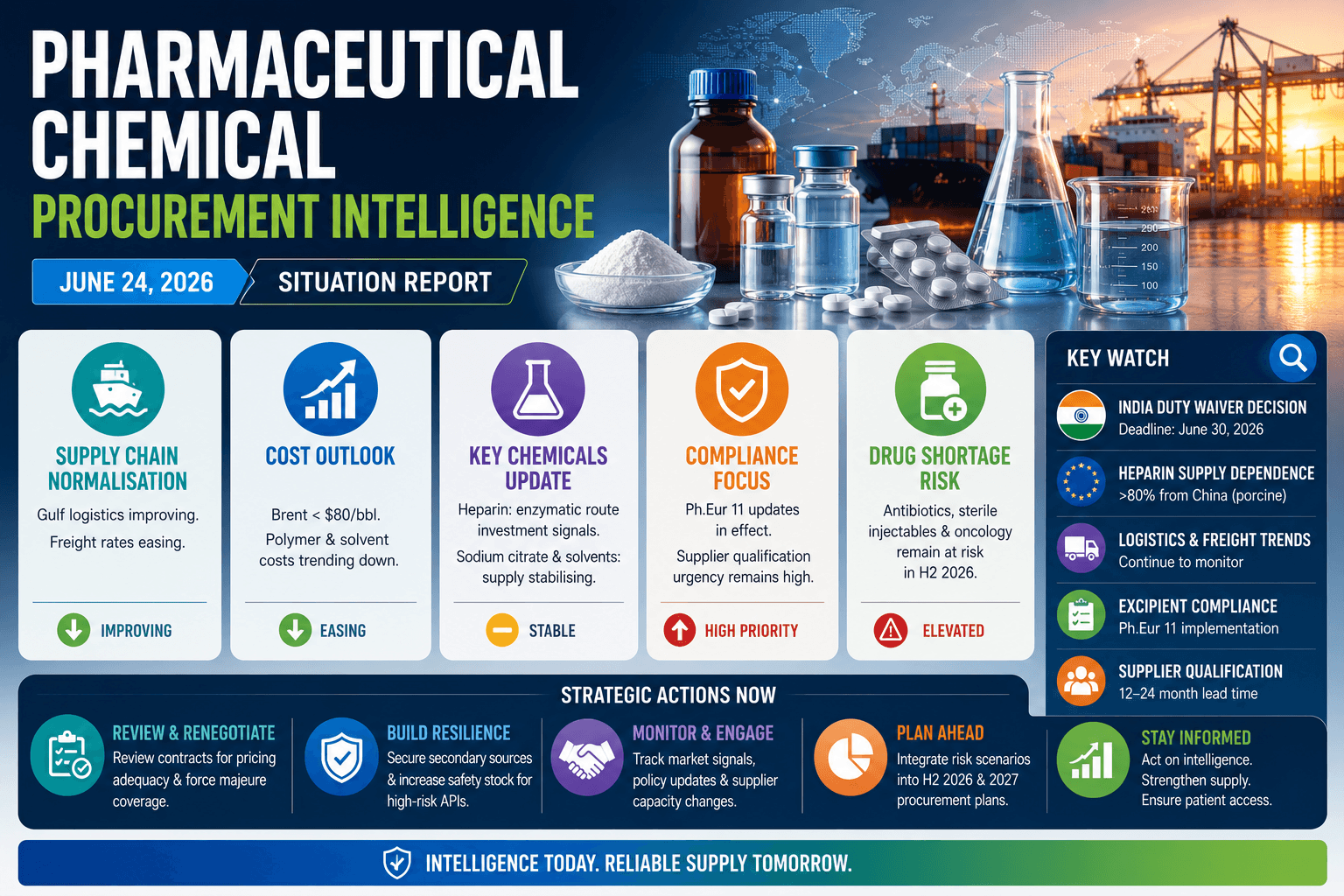
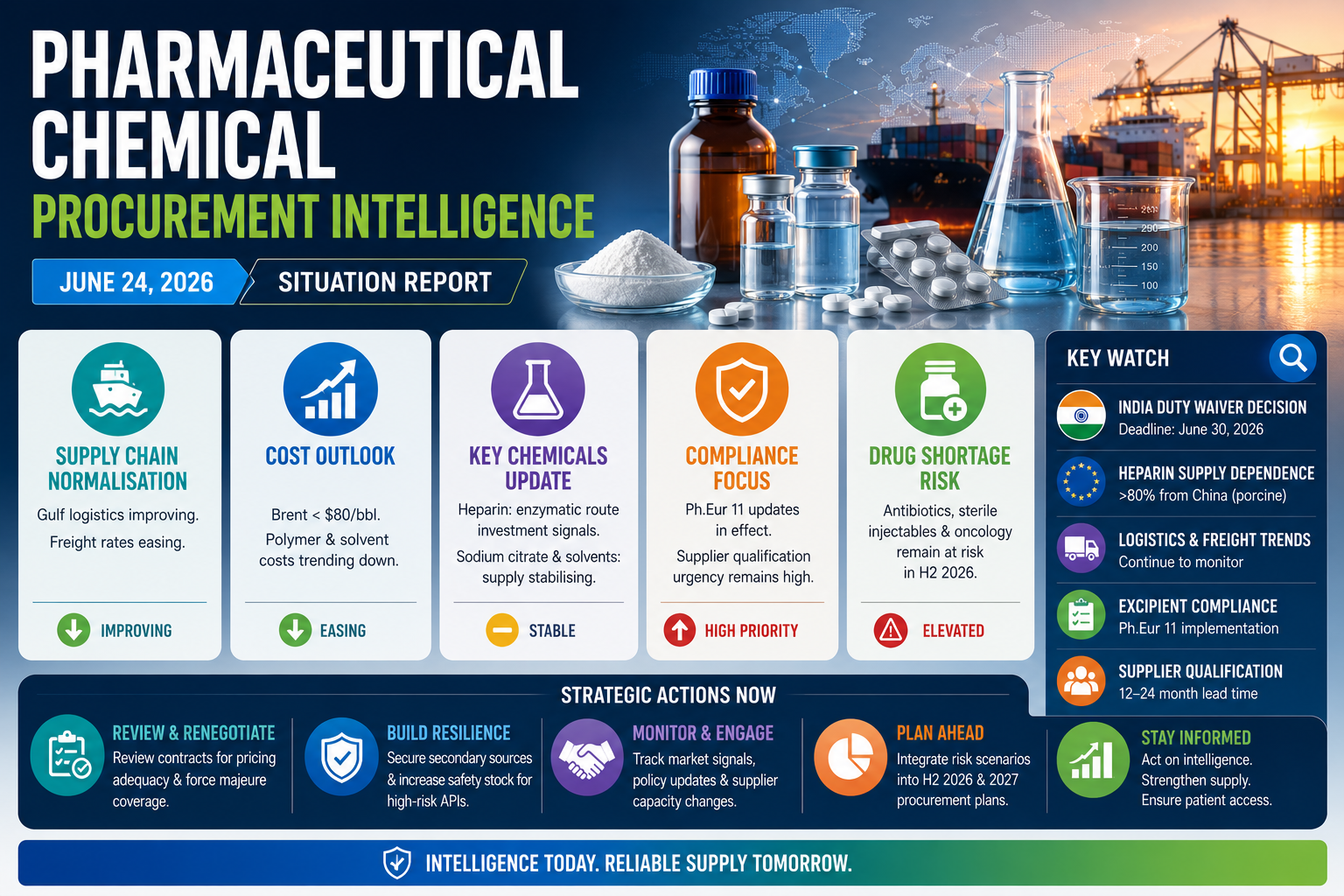
China’s summer porcine processing season is maintaining a healthy heparin supply, while freight costs are easing. Hospital pharmacies and procurement teams can now focus Q3 planning on logistics, documentation, and future supply trends. This guide outlines key priorities for a secure and cost‑effective heparin supply chain.

REACH SVHC July 2026 Update: What the ECHA Candidate List Addition Means for Specialty Chemical Supply Chains
The July–August 2026 SVHC update by ECHA is the most significant regulatory change for European chemical buyers this year. Potential additions such as brominated flame retardants, phthalate plasticizers and organotin compounds will trigger immediate compliance obligations. Specialty chemical distributors, manufacturers and importers must act now to avoid regulatory exposure.

Food Ingredient Freight Reset: Brent Below Pre-War Levels Opens the H2 2026 Cost Correction Window
Brent crude has returned to pre-war levels, creating a new opportunity for food ingredient buyers to reduce landed costs. July freight adjustments give procurement teams a timely chance to renegotiate contracts across major sourcing regions including China, Southeast Asia and India.
Don't miss out on our updates! Subscribe to our newsletter now
We're committed to your privacy. Tradeasia uses the information you provide to us to contact you about our relevant content, products, and services. For more information, check out our privacy policy.